
Contact Us
181 2883 6688
sunny.lin@hanyueint.com
2501,Block A,Building 3,Hengmingwan Chuanghui Center,Longcheng Street,Longgang District,Shenzhen
Recently, two U.S. trade measures have reached critical milestones: the 50% additional tariffs on certain Canadian goods officially adjusted as of October 30; and the Section 301 action targeting China's maritime, logistics, and shipbuilding industries is currently seeking input on whether to extend the two-month suspension, with the extension not yet finalized.
I. Adjustment to the scope of 50% additional tariffs on Canadian goods takes effect
On October 23, Trump signed an announcement adjusting the list of Canadian-origin goods subject to a 50% additional tariff, removing tariffs on certain products while adding new items to the taxed list. The new measures will officially take effect on October 30.
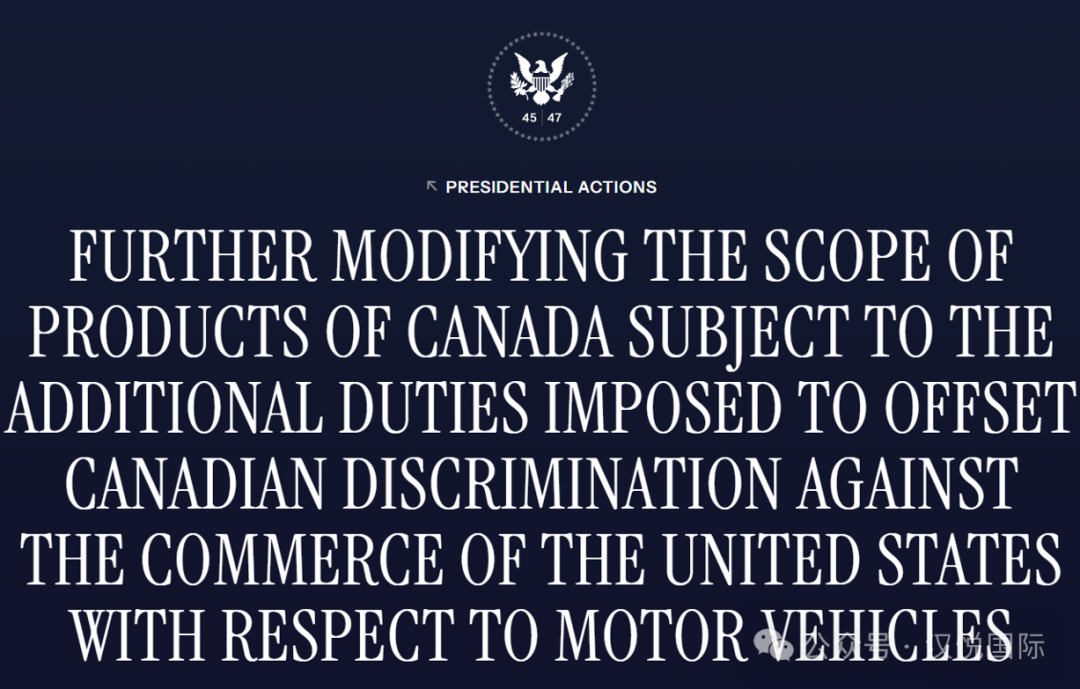
1. 50% additional tariffs on some plywood, packaging materials and machinery equipment have been waived.
Wood and paper products: Some plywood, paper and related products.
Packaging materials: Some packaging boxes, crate boxes and packaging containers.
Machinery equipment: Some refrigeration equipment, agricultural product processing and production equipment.
Other goods: Some fresh seaweed, dried seaweed, etc.
These goods will no longer be subject to the 50% additional tariffs covered by this adjustment starting from October 30th. Other applicable tariffs will remain in accordance with the current regulations.
2. Additional tariffs of 50% have been imposed on some carpets, household products and household appliances.
Home and household products: Some carpets, shampoo and paints.
Food and household appliances: Some cocoa powder, air conditioning equipment and upright freezers.
Industrial and wood products: Some valves, wooden coffins and other wood products.
Other goods: Some waste materials, archery equipment and canoes, etc.
The new tariffs will increase the import costs of these related goods in the United States, which may affect purchase quotations and supply contracts.
3. Goods under the USMCA still need to pay taxes. The 50% tariff can be added to the 232 tariff.
The White House has clearly stated that Canadian goods that comply with the origin rules of the USMCA will not automatically be exempt from this 50% additional tariff due to the preferential treatment under the agreement. As long as the goods fall within the coverage of the tax list, they still need to pay the additional tax as required.
The announcement also stipulates that the 50% additional tariff under Article 338 can be applied in combination with the tariffs under Article 232. For goods that are covered by both types of measures, importers need to check the comprehensive applicable tax rate.
The new measures apply to the formal import declaration and customs clearance on or after 00:01 Eastern Time on October 30th, or to the goods extracted from the bonded warehouse and entering the US market for consumption.
II. The US-China maritime 301 investigation is scheduled to be suspended for another two months.
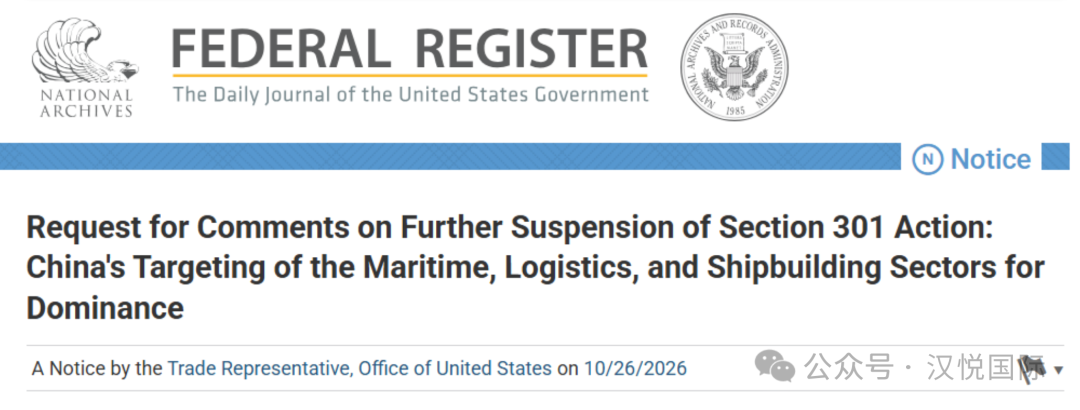
The Office of the United States Trade Representative (USTR) is soliciting opinions and considering extending the 301 response measures targeting China's maritime, logistics and shipbuilding industries for another two months.
The proposed suspension period is:
From 0:00 on November 10, 2026 (Eastern Time of the United States) to 23:59 on January 9, 2027.
The current suspension period that has already taken effect will end at 23:59 on November 9, 2026, Eastern Time in the United States. If the new proposal is ultimately approved, during the suspension period, the obligation to pay relevant maritime service fees will not be incurred, and the relevant import tariffs stipulated in Annex V.A will also continue to be suspended.
Peroration
The adjustment of the 50% additional tax range in Canada has taken effect. Be aware that 338 additional taxes or combined with 232 tariffs may apply. The 301 actions related to maritime, logistics, and shipbuilding in China and the United States have been postponed and are still under consultation. Han Yue International will continue to monitor global tariff policies, maritime measures, and trade regulatory developments, and provide customers with timely logistics information and transportation solution references.