
Contact Us
181 2883 6688
sunny.lin@hanyueint.com
2501,Block A,Building 3,Hengmingwan Chuanghui Center,Longcheng Street,Longgang District,Shenzhen
Introduction:
Recently, customs and regulatory developments on both the Chinese and U.S. sides deserve attention from foreign trade enterprises. The U.S. Customs and Border Protection (CBP) has experienced delays in outbound notifications through its Automated Commercial Environment (ACE) system, affecting ocean, air, rail freight, and bonded transportation operations, which may impact the status confirmation and clearance coordination for some imported goods.
Meanwhile, Ningbo Customs intercepted 11,750 steel cylinders filled with helium via freight channels. This marks the first case of such an interception at Ningbo port since China implemented temporary export restrictions on helium.
U.S. Customs ACE system anomaly causes delays in processing acknowledgments for certain transactions
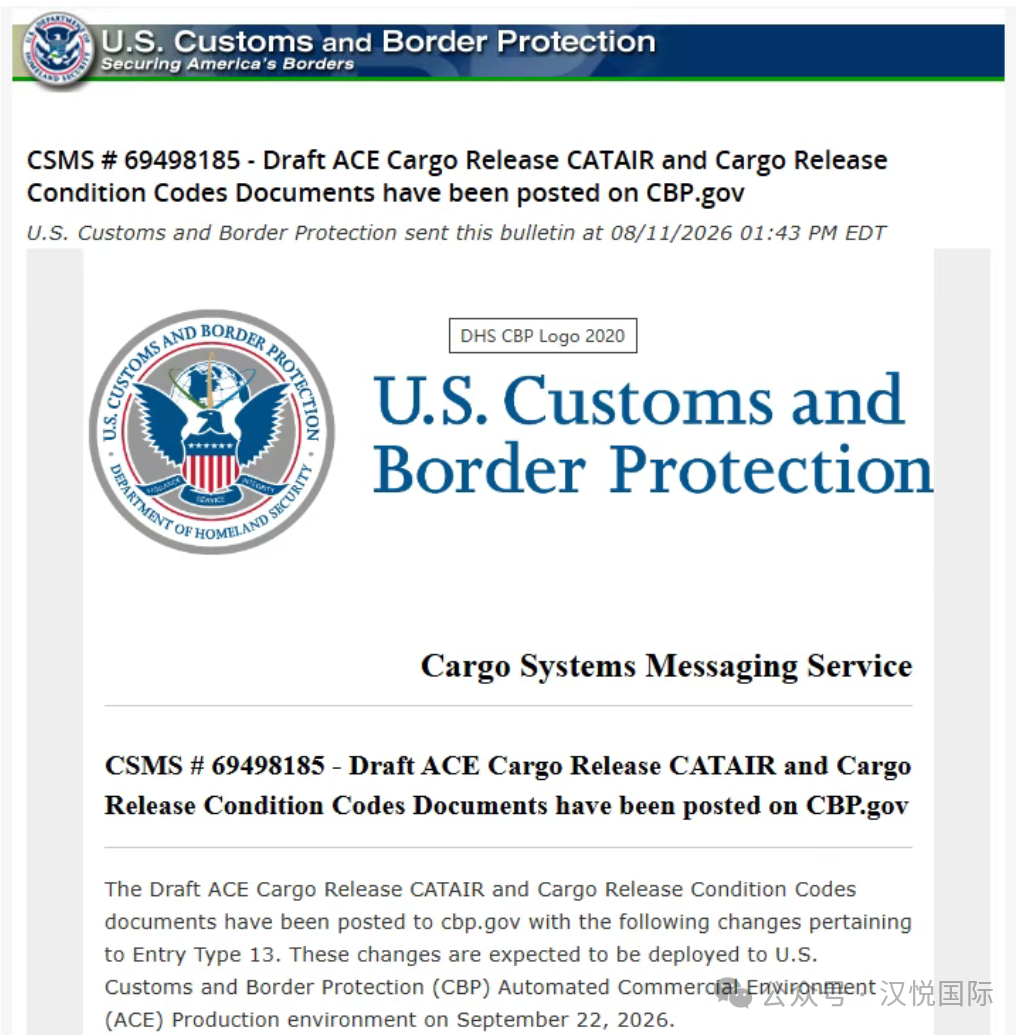
U.S. Customs has issued an urgent notice—CSMS #70208464—regarding delays in outbound notifications for Air, Ocean, and Rail Manifests, as well as In-Bond shipments.
The notice warns that acknowledgments or system messages sent by the Customs and Border Protection (CBP) Automated Commercial Environment (ACE) system may experience delays, affecting ocean, air, rail manifests, and bonded and transit shipments.
CBP: "The exact cause is currently unknown and under investigation."
Term Explanation:
Outbound(出向):The ACE customs system sends data outward, including electronic receipts, status updates, release instructions, etc., but not delays in the export of goods.
Inbound(入向):The enterprise submits the declaration materials to the customs.
In short: There is a bug in the ACE system of the US Customs. The reply emails or system messages sent externally will experience slowdown or freezing issues!
According to the information provided by the US customs, as this matter involves multiple aspects such as maritime, air, railway manifests, and In-Bond, etc., before the system is restored, import clearance, export manifest sending, inland customs transfer for status in the US, and other related operations may all be affected.
False status, unable to release: The customs actually had already released the goods in the background, but due to the inability to issue the system receipt, the systems at the port, storage yard or supervision warehouse failed to display the release status in a timely manner, causing the truck drivers to be stuck at the gate when picking up the goods.
Delayed status update: The customs officers' real-time system tracking may result in situations where they cannot find the latest status.
Increased cost of manual communication: System bugs may cause people to have to switch back from automated online operations to calling or emailing the customs or the port for manual verification of the "original state".
Finally, please don't panic too much. The customs is urgently repairing the system. Such failures are generally due to message queue backlog. Once the system is restored, the accumulated notifications will be gradually reissued.
Ningbo Customs has for the first time seized over ten thousand steel cylinders of helium that were illegally exported.
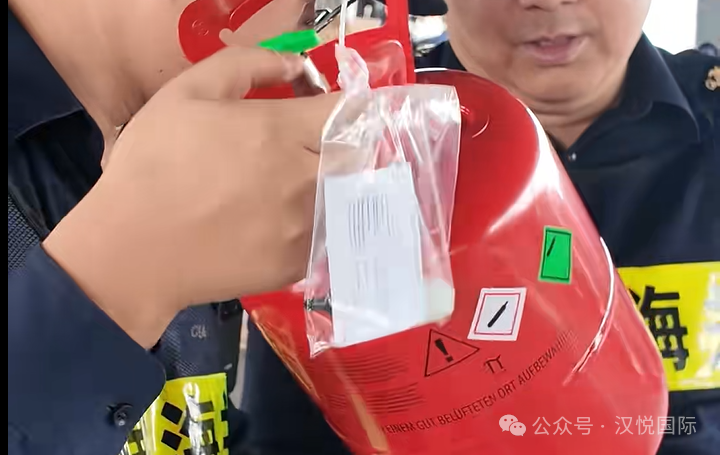
According to public reports, the Ningbo Customs seized a batch of helium-filled cylinders through the freight channel, totaling 11,750 units.
This is the first case of helium export violation detected at the Ningbo port since China implemented a temporary ban on the export of helium on July 10, 2026.

The export of helium has been temporarily restricted.
On July 10, 2026, the Ministry of Commerce and the General Administration of Customs issued Announcement No. 29 of 2026, deciding to implement temporary export prohibition management for the following goods:
Product Name: Helium
Customs Tariff Number: 2804290010
This announcement will come into effect as of the date of its release. Any subsequent adjustments will be announced separately. As of now, the official website of the Ministry of Commerce still labels this document as "currently valid".
This means that relevant enterprises cannot simply use hazardous goods transportation materials, cylinder inspection documents, or shipping company booking confirmations to handle helium gas exports. Even if the goods meet the conditions for hazardous goods packaging and maritime transportation, they must also comply with the current national trade management policies.
The fact that the shipping company allows carriage does not mean that the goods can be legally exported; having the conditions for hazardous goods transportation does not replace the requirements of customs and trade management.
Conclusion
Abnormalities in the ACE system of the United States may affect the status feedback of some goods and the connection of container release. Enterprises importing from the United States recently should promptly confirm the actual release situation with the customs brokerage firm. Helium is currently under a temporary export ban management, but this should not be interpreted as the prohibition of the export of all bottled gases. HanYue International will continue to monitor the global customs clearance and hazardous materials supervision dynamics, and provide customers with timely logistics information and transportation solution references.