
Contact Us
181 2883 6688
sunny.lin@hanyueint.com
2501,Block A,Building 3,Hengmingwan Chuanghui Center,Longcheng Street,Longgang District,Shenzhen
Recent labor action at major European ports and declining schedule reliability at Asian container ports have both drawn industry attention. According to Hapag-Lloyd’s latest notice, a 48-hour strike began at major German seaports at 22:00 local time on September 2, while all terminals in Rotterdam are also expected to be affected by industrial action from 11:00 to 19:00 on September 4. Vessel operations, terminal handling and inland cargo transportation may experience delays. Meanwhile, Sea-Intelligence data show that global container shipping schedule reliability fell to 56.4% in July, while on-time performance declined month-on-month across all 14 major Asian ports included in its analysis. At Shanghai, the on-time vessel arrival rate was just 21.0%. For shippers with cargo moving on European routes or departing from major Asian ports such as Shanghai and Ningbo, vessel arrivals and departures, container pickup and return, rail and truck connections, cargo cut-off and transshipment arrangements, as well as actual ETD/ETA changes, warrant continued attention.
Hapag-Lloyd’s latest Northern Europe operational update shows that the strike at German ports began at 22:00 local time on September 2 and is expected to continue until 22:00 on September 4, affecting major German seaports. The carrier said vessel operations, terminal handling and inland cargo transportation to and from the ports are expected to face disruption during this period.
Meanwhile, all terminals in Rotterdam are expected to be affected by industrial action from 11:00 to 19:00 local time on September 4. Hapag-Lloyd said terminal operations may be disrupted during the action, potentially causing delays to vessel and cargo handling as well as inland transportation. The carrier is continuing to coordinate with relevant operating partners and is taking measures to minimize the impact on supply chains.
German ports have already experienced labor action in recent weeks. Another Hapag-Lloyd update on German port operations indicates that this is the second round of warning strikes during the current collective bargaining negotiations for German seaports. A previous 24-hour labor action took place around August 18. Customers affected by specific operational changes will be informed through the carrier’s usual communication channels.
It should be noted that different Hapag-Lloyd operational pages list the start time of the latest German strike as either 22:00 or 23:00 on September 2, although both confirm that the action will last for 48 hours. Actual terminal operating schedules should therefore be confirmed against the latest notices issued by local terminals and shipping lines.
For cargo moving through Hamburg, Bremerhaven, Wilhelmshaven and Rotterdam, shippers should monitor not only vessel berthing and terminal operations, but also container pickup and return arrangements, rail services and truck connections. The end of a strike does not necessarily mean that all operations will immediately return to normal. Any subsequent vessel schedule changes or inland transportation delays will depend on the specific port area and individual sailing.
Global schedule reliability data released by Sea-Intelligence on August 26 show that global container shipping schedule reliability fell by 6.1 percentage points month-on-month to 56.4% in July 2026. In a further analysis of Asian ports released on September 2, Sea-Intelligence reported that all 14 major Asian ports covered in its analysis recorded month-on-month declines in schedule reliability. In other words, schedule reliability fell across all 14 major Asian container ports tracked by Sea-Intelligence in July.
Among them, Ningbo-Zhoushan saw schedule reliability fall by 20.1 percentage points to 34.6%, while the on-time vessel arrival rate at Shanghai declined by 19.2 percentage points to 21.0%. This means that, within Sea-Intelligence’s statistical scope, about 21% of container vessels arrived at Shanghai on time in July. Sea-Intelligence said that, excluding the extreme supply chain disruptions during the pandemic, Shanghai’s schedule reliability had never fallen to such a low level in its 14 years of data.
Other major Asian ports were also under pressure. Yantian fell by 23.5 percentage points to 48.3%, Hong Kong declined to 51.6%, Singapore to 43.2%, Port Klang to 33.3%, and Busan to 40.9%.
Recent industry reports have also linked some delays at Asian ports to extreme weather and port congestion. However, it is important to distinguish these reports from the Sea-Intelligence data itself, which reflect port schedule reliability and congestion conditions in July. The figures do not mean that all sailings in September will experience delays at the same rate.
Sea-Intelligence noted that, with more than half of vessel arrivals delayed at several busy Asian ports, accumulated disruption could continue to spread through shipping networks and affect certain major trade lanes over the coming months. For shippers moving cargo from Shanghai, Ningbo and other major Asian ports—particularly time-sensitive shipments, cargo requiring transshipment, or shipments connecting with inland transportation in Europe or North America—actual departure times, cargo cut-off arrangements, transshipment connections and destination-port ETAs should be checked against individual bookings, with appropriate buffer time built into transportation plans.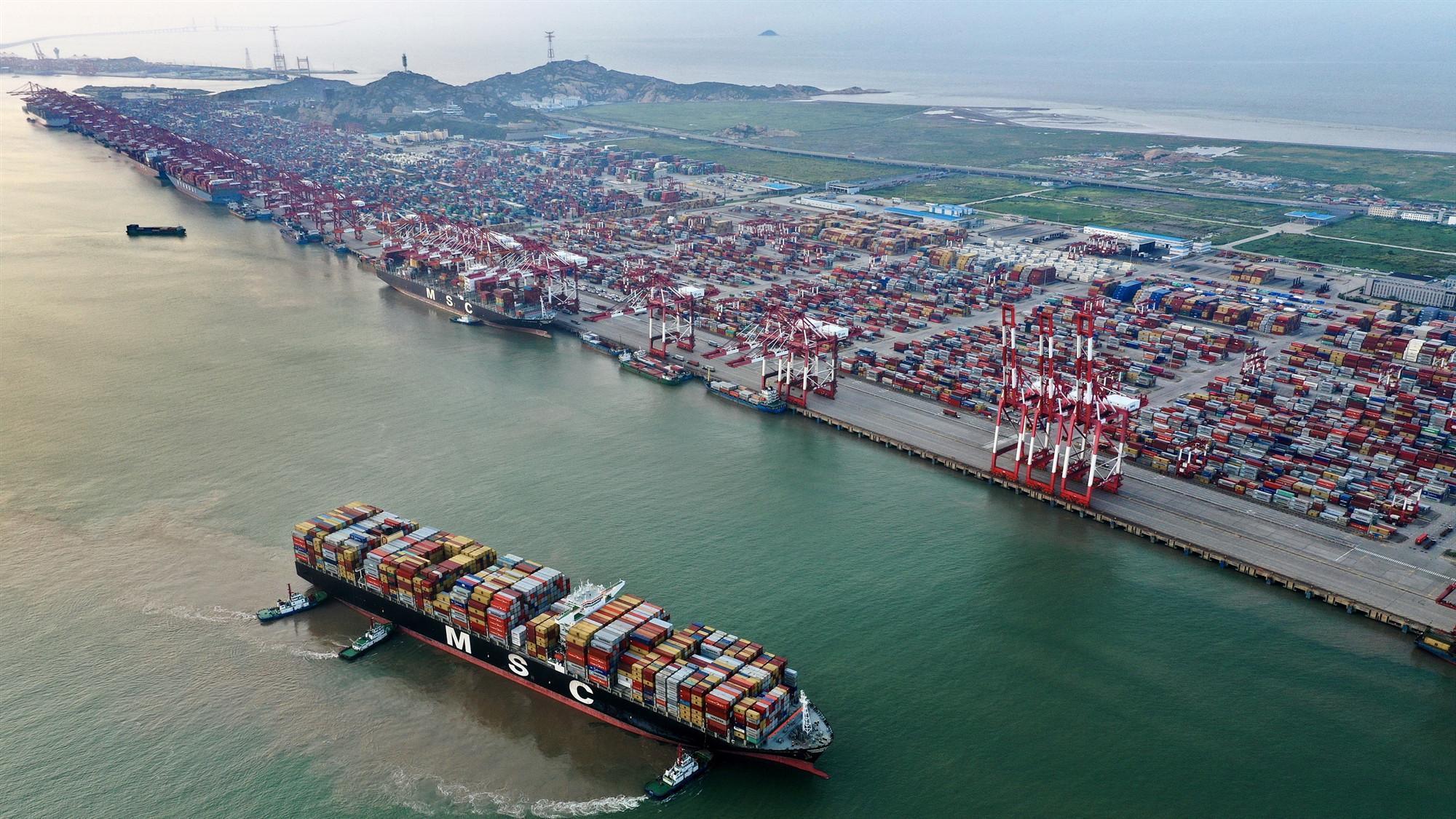
Recent labor action at major German seaports and in Rotterdam has increased uncertainty surrounding port operations and inland transportation in Northern Europe, while schedule reliability at major Asian ports also declined significantly in July. For shipments on European routes or departing from Shanghai, Ningbo and other major Asian ports, shippers are advised to continue monitoring port operations, container pickup and return, inland connections, cargo cut-off and transshipment arrangements, and actual vessel schedules.
It should be noted that July schedule reliability figures do not mean that all sailings in September will experience delays at the same rate. Actual conditions should be assessed based on individual bookings and the latest notices from shipping lines.
Hanyue International will continue to closely monitor developments across global ports and shipping markets, providing customers with timely logistics updates and transportation solutions. For information on specific trade lanes or customized logistics solutions, please contact our customer service team.