
Contact Us
181 2883 6688
sunny.lin@hanyueint.com
2501,Block A,Building 3,Hengmingwan Chuanghui Center,Longcheng Street,Longgang District,Shenzhen
Recently, several new developments in global tariffs, trade regulation, and international shipping have emerged that exporters should closely monitor. The United States’ 50% tariff on approximately $20 billion worth of Canadian imports took effect on August 22, while Canada announced corresponding countermeasures starting September 8. Meanwhile, the United States continues to focus on third-country transshipment, and Singapore has stated that it will investigate and take action where credible evidence shows its transshipment network is being used to evade tariffs. In the Middle East, the United States plans to announce a new round of economic sanctions against Iran, while risks to energy transportation through the Strait of Hormuz remain under market scrutiny. On the shipping side, Hapag-Lloyd has updated customs clearance, documentation, and onward transportation requirements for cargo transshipping via Jeddah to the UAE, Kuwait, Qatar, Bahrain, and Iraq. For exporters involved in North American trade, third-country transshipment, Middle East routes, or Gulf-region shipments, changes in tariffs, rules-of-origin compliance, transportation routes, and transshipment clearance requirements remain important issues to monitor.
After U.S.-Canada trade negotiations failed to reach an agreement before the deadline, a new 50% U.S. tariff on certain Canadian imports took effect on August 22, covering approximately $20 billion worth of Canadian goods exported to the United States. The measures affect multiple product categories and have further intensified trade tensions between the two countries.
Canadian Prime Minister Mark Carney subsequently announced that Canada would take countermeasures on a comparable scale. He said that starting September 8, Canada would impose retaliatory tariffs on U.S. imports across several sectors. The specific products, tariff rates, and exemption arrangements will be subject to official documents subsequently released by the Canadian government. At the time of the relevant reports, no new round of formal negotiations had been announced, adding further uncertainty to U.S.-Canada trade relations.
For exporters, the United States and Canada are highly integrated supply-chain markets, and some goods may involve U.S. importation, warehousing in Canada, cross-border transportation, or subsequent re-entry into the U.S. market. As tariff measures from both sides take effect, businesses should not only monitor import duties in the final destination country, but also consider whether their actual trade routes involve Canada and whether the goods concerned are subject to the new tariffs.
For shipments involving U.S.-Canada cross-border supply chains, tariff costs, trade routes, and final import arrangements may require closer attention. Businesses should review the applicable HS codes, origin, and actual trade routes to reassess tariff costs, quotation validity, and final import arrangements. For orders with confirmed sales prices or logistics costs, it is particularly important to monitor subsequent policy changes based on the specific circumstances of the shipment.
 02 Singapore Responds to U.S. Transshipment Concerns as Origin Compliance Remains in Focus
On August 23, Singapore Prime Minister Lawrence Wong addressed recent U.S. concerns over third-country transshipment during his National Day Rally speech.
Wong said Singapore would not allow its ports and trade networks to become channels for illegal trade. Regarding the transshipment of goods through third countries to evade tariffs, he stated that Singapore would investigate and take action where there is credible evidence of wrongdoing.
At the same time, he emphasized that Singapore is a major global transshipment and trading hub, handling enormous volumes of trade each year, making it impractical to trace and verify the entire supply chain behind every shipment passing through the country.
This statement is particularly relevant for exporters. Following Vietnam’s response to U.S. concerns over transshipment, Singapore has also publicly clarified its position on illegal transshipment and origin violations, indicating that third-country transshipment and rules-of-origin compliance remain an important focus of international trade enforcement.
It is important to note that third-country transit or transshipment does not in itself constitute illegal transshipment. Normal transportation, warehousing, re-exporting, and manufacturing or processing that complies with applicable rules of origin remain legitimate international trade practices. Regulatory scrutiny is primarily directed at illegal practices such as sham processing, false labeling, fraudulent documentation, or misdeclaration of origin intended to evade applicable tariffs.
For shipments involving transit, processing, or re-export through Southeast Asia, exporters should pay appropriate attention to whether origin declarations, manufacturing and processing information, commercial invoices, packing lists, Bills of Lading, and other trade documents are accurate, complete, and consistent. Compliant trade should not be a cause for undue concern, but as more countries respond to U.S. concerns, compliance across third-country supply chains remains an issue worth monitoring.
On August 24, international oil prices declined ahead of an expected announcement by U.S. Treasury Secretary Scott Bessent regarding a new round of sanctions against Iran.
According to Reuters, Brent crude fell by as much as USD 1.22 to USD 93.17 per barrel, while WTI crude declined by USD 1.20 to USD 85.86 per barrel. Markets are currently awaiting details on the scope and implementation of the new U.S. sanctions.
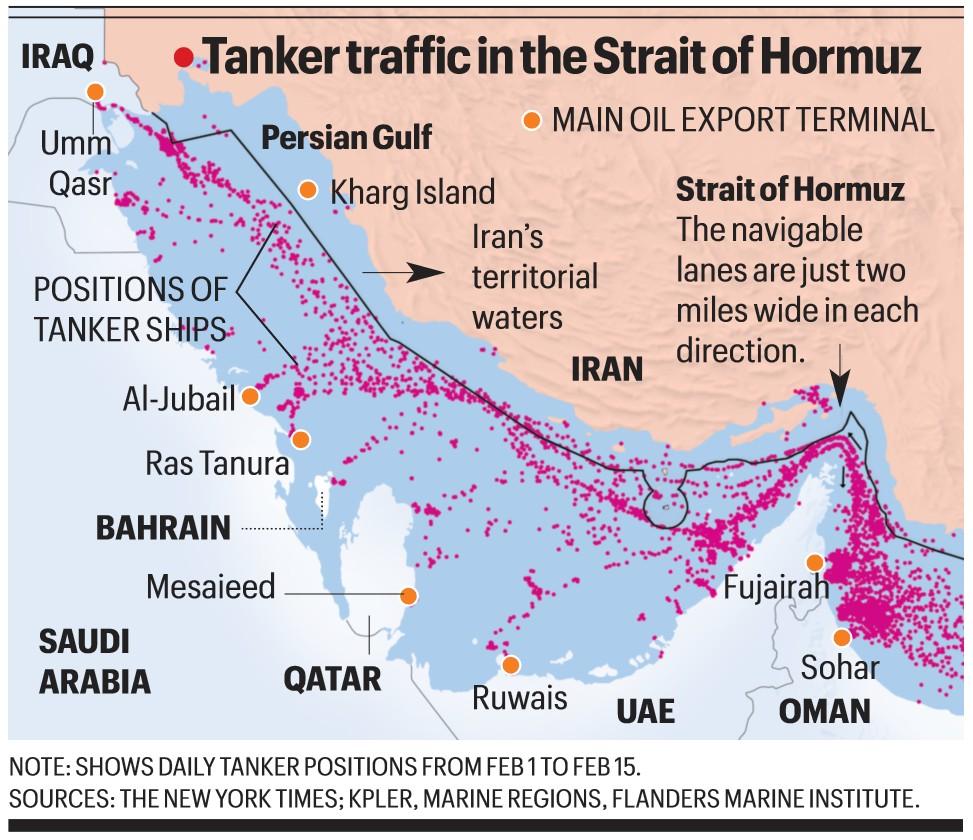
The development comes as U.S.–Iran peace talks remain stalled and shipping through the Strait of Hormuz continues to attract attention. As the Strait is a critical route for global oil transportation, changes in regional conditions may affect tanker movements, energy prices, and shipping markets across the Gulf.
It should be noted that at the time of the Reuters report, the U.S. had not yet formally announced the specific sanctions list or implementation details. It is therefore too early to determine which companies, vessels, or Iranian trading partners may ultimately be affected, or to assess the specific impact on shipping.
For exporters with shipments involving the Middle East and Gulf region, developments in the scope of sanctions, actual vessel traffic through the Strait of Hormuz, and carrier routing adjustments remain worth monitoring. If subsequent measures extend to shipping or Iranian trading partners, regional transportation arrangements and related costs could also be affected.
U.S. Treasury Secretary Scott Bessent previously said that the United States plans to announce a new round of economic sanctions against Iran, with details expected to be disclosed at a press conference on Monday local time.
In early Asian trading on August 24, Brent crude briefly fell, while WTI crude dropped $1.20 to $85.86 per barrel. The market is currently awaiting details on the scope and implementation of the new U.S. sanctions. These prices are intraday figures and may continue to fluctuate.
The development comes amid continued uncertainty surrounding U.S.-Iran tensions and ceasefire arrangements, while shipping through the Strait of Hormuz remains closely watched. As a key route for global oil transportation, developments in the Strait could continue to affect tanker traffic, energy prices, and the Gulf shipping market.
It is important to note that, at the time of the relevant Reuters report, the United States had not yet officially announced the specific sanctions list or implementation details. Therefore, it is too early to determine which companies, vessels, financial institutions, or Iranian trading partners may ultimately be targeted, or to assess the specific impact on the shipping market.
For exporters with shipments involving the Middle East and Gulf region, it is advisable to continue monitoring the scope of the sanctions, actual vessel traffic through the Strait of Hormuz, and carrier route adjustments. If the new sanctions ultimately cover shipping, energy trade, financial settlements, or specific Iranian trading partners, regional transportation arrangements and related costs could change accordingly.
Recently, new U.S. and Canadian tariff measures have taken effect, while scrutiny of third-country transshipment continues to intensify. New developments have also emerged regarding Middle East sanctions and Jeddah transshipment requirements. For shipments involving North America, Southeast Asian transshipment, and the Gulf region, businesses should continue to closely monitor tariffs, rules of origin, and transshipment requirements. Hanyue International will continue to track global trade policies and shipping developments, providing clients with timely logistics updates and transportation solutions. For the latest information or customized logistics solutions, please contact our customer service team.